
How Do Professionals Restore Headlights That Have Become Faded or Yellowed
Vehicle owners often face declining visibility when headlights develop oxidation from sunlight, moisture, and environmental debris. Many drivers want reliable solutions that correct surface wear without requiring complete replacement. Professional methods restore clarity effectively because controlled procedures target deeper layers of deterioration.
Drivers also appreciate skilled corrective work because headlights age differently depending on driving conditions, parking environments, and regional climates. Surface fogging, color change, and fine scratching can all appear at different rates. Evaluations help determine which corrective steps are necessary to restore headlights through a stable and predictable process.
How Professionals Restore Headlights With Controlled Corrective Steps
Professionals restore headlights by removing oxidation through progressive sanding that smooths damaged surfaces. Specialists polish lenses using compounds that refine clarity after sanding stages. Technicians apply protective coatings that help maintain restored visibility.
How Surface Assessment Guides The Work Needed To Restore Headlights
Professionals begin each evaluation with a detailed inspection that identifies oxidation depth and any structural concerns. Surface damage develops differently depending on climate exposure and the amount of sunlight a vehicle receives. Assessments help determine whether lenses require heavy correction or light resurfacing.
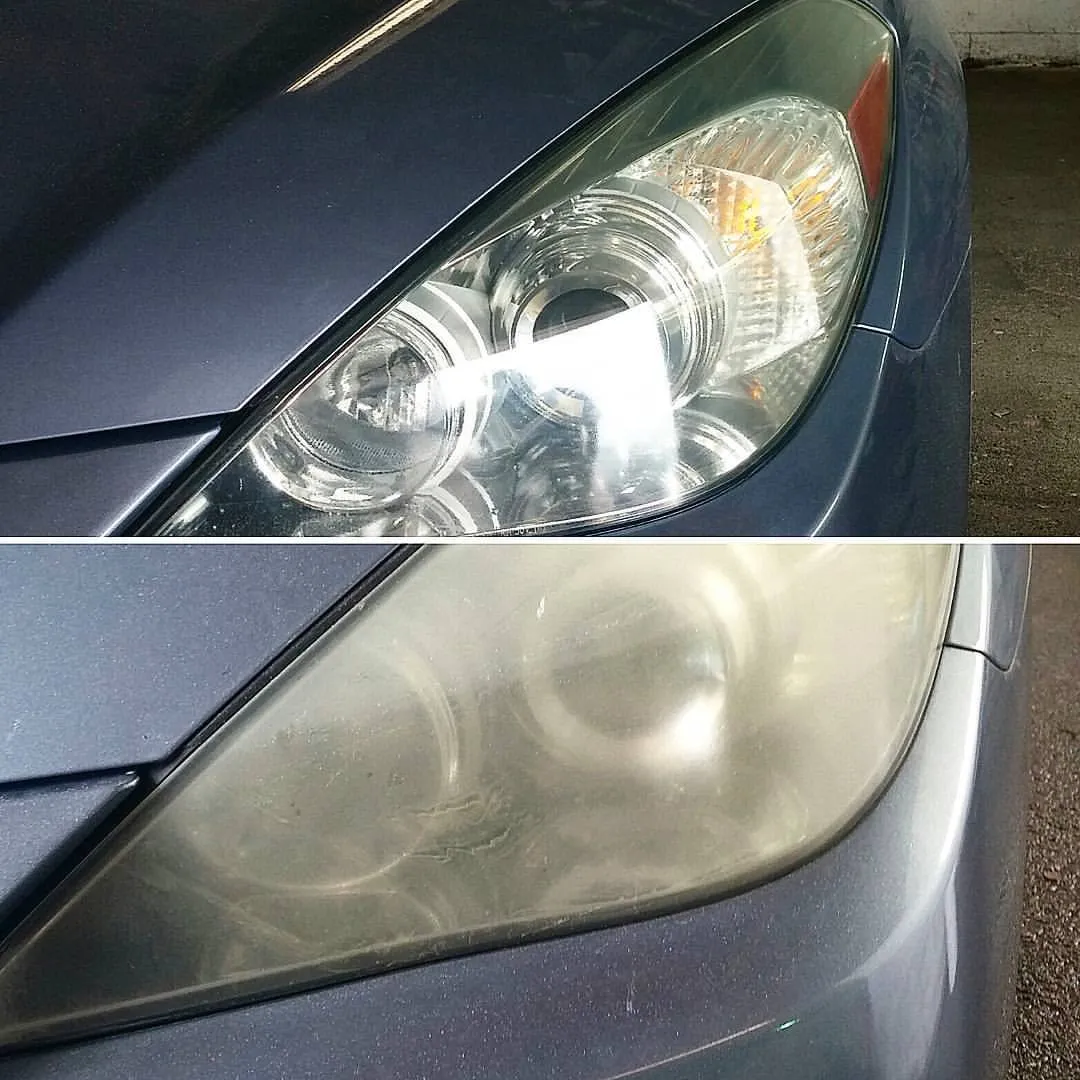
Lighting direction, color loss, and clarity issues provide clues about how aggressively professionals should restore headlights. Minor fading requires less sanding than deeply yellowed lenses that show heavier deterioration. Specialists monitor how lenses react during each preparation stage to avoid unnecessary abrasion.
Material composition and surface condition influence how technicians restore headlights for long-lasting performance. Some lenses respond quickly to correction while others require multiple sanding stages. Professionals select appropriate techniques based on the unique condition of each headlight.
How Sanding Procedures Allow Technicians To Restore Headlights Correctly
Professionals rely on sanding stages because oxidation often sits beneath the outermost surface layer, and removing damaged material helps restore headlights effectively. Surface leveling prepares lenses for polishing and improves clarity significantly. Controlled sanding keeps damage from spreading across unaffected areas.
Coarse abrasive stages remove oxidized layers, and professionals restore headlights evenly through measured downward pressure. Balanced motion prevents gouging or uneven surfaces.
Medium abrasives refine scratches left during initial sanding, and professionals restore headlights using consistent overlapping passes. Smooth transitions promote uniform clarity.
Fine abrasives remove remaining micro-defects, and technicians restore headlights using carefully adjusted movement. Even refinement prepares lenses for polishing.
Curved surfaces require rotational techniques, and professionals restore headlights using patterns designed for shape consistency. Adapted motion helps maintain proper contour.
Edge areas demand lighter sanding, and specialists restore headlights using reduced pressure. Careful handling prevents corner thinning or distortion.
Sanding accuracy determines how well clarity returns once polishing begins. Technicians maintain controlled patterns to prevent streaking, haze spots, or uneven thickness. Proper sanding enhances optical performance under night conditions.
Specialists monitor surface temperature closely to avoid heat buildup that may distort plastic. Slow controlled motion ensures stable progress throughout each sanding stage. Consistent technique produces predictable resurfacing results.
How Polishing Compounds Further Enhance Efforts To Restore Headlights
Polishing follows sanding because it smooths the surface into a clear and reflective finish. Compounds correct fine scratches and restore headlights by improving surface transparency. Correct timing ensures the lens reaches a uniform clarity level.
Polishing pads vary in strength, and technicians use different textures depending on how much correction remains. Each stage contributes to the final restored appearance. Professionals blend multiple compound grades to maintain controlled clarity enhancement.
Clean polishing steps help restore headlights by eliminating haze that remains after sanding. Polishing compounds break down gradually and produce a smooth finish. Technicians work carefully to avoid over-polishing sensitive areas.
How Protective Coatings Help Maintain Results After Professionals Restore Headlights
Coatings provide durability once corrective steps are complete and help restore headlights for long-term clarity. Protective layers resist future oxidation by reducing exposure to sunlight and road contaminants. Treated lenses retain polished surfaces longer.
UV coatings block sunlight that contributes to yellowing, and specialists restore headlights using layers that resist harsh conditions. Stable coatings prolong clarity.
Sealants help repel contaminants, and technicians restore headlights using products that prevent debris from bonding. Clean surfaces maintain visibility longer.
Moisture-resistant formulas reduce fogging, and professionals restore headlights to prevent early haze. Treated surfaces withstand damp environments effectively.
Clear protective films shield lenses from scratches, and specialists restore headlights using materials that protect against impact. Films improve longevity under heavy use.
High-grade coatings maintain smooth texture, and professionals restore headlights by applying finishes that resist surface roughness. Long-lasting protection reduces frequent corrections.
Durable coatings help maintain restored clarity by guarding resurfaced lenses from harsh weather cycles. Layers provide extra stability as vehicles experience daily environmental exposure. Effective protection helps keep headlights functioning efficiently.
Technicians achieve reliable performance through balanced coating thickness and controlled curing periods. Protective layers bond securely when applied under the right conditions. Stable coatings enhance visibility across varying lighting environments.
How Professional Experience Improves The Work Required To Restore Headlights
Professionals restore headlights efficiently because experience guides every corrective step. Skilled specialists adjust their approach based on lens condition, oxidation level, and age. Correct decisions prevent surface damage and ensure consistent clarity results.

Procedural familiarity helps professionals understand how lenses respond to each sanding and polishing stage. Trained specialists monitor progress with precision to avoid over-correction. Experience supports balanced outcomes during complex restoration scenarios.
Surface characteristics differ across various vehicle types, and professionals restore headlights using adaptation techniques learned through practice. Knowledge of lens behavior helps ensure high-quality results. Experienced specialists achieve outcomes that remain reliable under diverse driving conditions.
How Headlight Condition Improves After Professionals Restore Headlights
Vehicle lighting improves significantly when professionals restore headlights accurately. Clean lenses produce stronger beam focus and reduce nighttime glare. Drivers experience improved visibility across roads with limited illumination.
Restored surfaces improve vehicle appearance because polished lenses appear newer and more refined. Clear headlights contribute to cohesive styling across the front exterior. Surface enhancement helps maintain visual balance alongside other vehicle upgrades.
Performance stays consistent longer when professionals restore headlights because resurfaced lenses respond better to protective coatings. Stronger clarity supports safe nighttime driving across changing environments. Drivers maintain confidence through reliable long-term visibility.
Restore Clarity Through Professional Headlight Restoration
Headlight clarity declines gradually through sunlight exposure, moisture, and everyday driving wear, and professional methods restore headlights through controlled resurfacing that corrects oxidation and haze. Progressive sanding, measured polishing, and protective coatings work together to return visible sharpness. Drivers appreciate renewed performance when clear headlights improve safety and enhance overall vehicle appearance.
Vehicle owners seeking dependable visual clarity can rely on Ztech Audio+ for services including headlight restoration, protective coatings, window tinting, car audio upgrades, vehicle electronics, spray-on bedliners, and custom accessories. Skilled specialists provide detailed guidance that supports long-lasting results and improved nighttime visibility. Contact our team today to schedule professional services designed to restore headlights for stronger clarity and confident driving.