Built to Endure: Why UV Resistance Matters in Your Truck Bedliner
UV rays can quickly degrade standard truck bedliners, causing fading, cracking, and premature wear. Spray-on protection offers a robust solution, bonding directly to the truck bed for consistent coverage and superior sun resistance. Choosing the right coating ensures your vehicle maintains both its functionality and appearance for years to come.
Maintaining a durable truck bed isn’t only about appearance; it directly affects the vehicle’s longevity and resale value. Advanced spray-on protection uses high-performance polymers that resist impact and UV damage simultaneously. Understanding these options helps owners make informed decisions that protect their investment.
How Does UV Resistance Improve Your Truck Bedliner?
UV-resistant bedliners provide a protective barrier that prevents sun damage and material degradation. Specialized spray-on protection coatings absorb and deflect UV rays, maintaining color and structural integrity over time. Vehicles exposed to direct sunlight consistently benefit from longer-lasting performance and a cleaner, newer look.
The Science Behind Spray-on Protection
Spray-on protection utilizes polyurethane or polyurea polymers, delivering both flexibility and toughness. Polyurethane offers elasticity that prevents cracking under heat, while polyurea provides strong adhesion that resists peeling. Together, these polymers create a UV-resistant layer that shields the bed from daily wear and sunlight exposure.
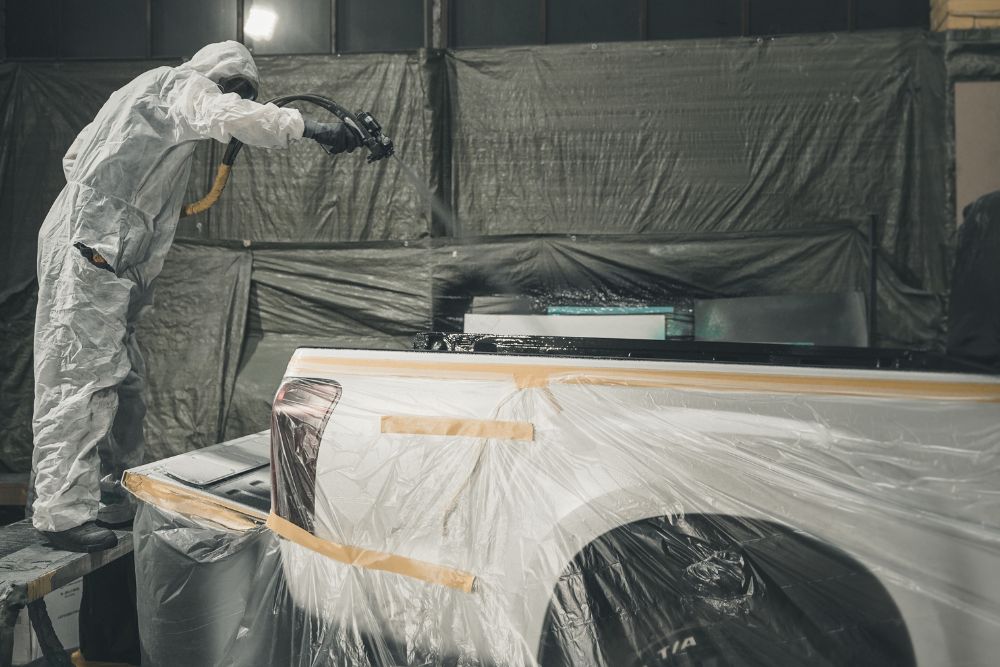
Installation quality directly influences the bedliner’s effectiveness. A properly prepped surface ensures the coating bonds uniformly, avoiding weak spots prone to fading or chipping. Professional applications guarantee consistent thickness and a seamless barrier for optimal UV defense.
Owners also gain added benefits beyond UV protection. The science behind spray-on bedliners highlights improved impact resistance, corrosion prevention, and a non-slip surface that secures cargo during transit. Each of these advantages contributes to overall vehicle safety and usability.
Why Choose Spray-on Protection Over Drop-in Liners?
Drop-in liners may shift, trap moisture, and allow UV exposure at edges, accelerating wear. Spray-on protection forms a continuous layer that conforms to every contour of the bed. This eliminates gaps where sun damage or rust can begin, extending the life of your truck.
Additionally, spray-on liners offer superior adhesion that prevents peeling even under heavy loads. They maintain their protective qualities despite frequent hauling or exposure to harsh elements. As a result, truck owners enjoy both practical durability and a clean, professional finish.
The customization options for spray-on protection also make a difference. Thickness, texture, and color can be tailored to match vehicle needs while enhancing appearance. Beyond aesthetics, these choices influence how effectively the bedliner resists UV rays over time.
How to Maximize Longevity Under Sun Exposure
Direct sunlight can silently degrade a truck bed over time, even if it looks fine on the surface. The combination of heat and UV rays can make materials brittle, causing micro-cracks that eventually compromise the coating. Understanding how sunlight interacts with the polymer layer helps extend the life of your bedliner.
One of the most overlooked strategies is reflective shade management. Parking in shaded areas or using a retractable truck bed cover can drastically reduce UV exposure. Additionally, UV-blocking bed caps or tonneau covers help prevent heat buildup that accelerates polymer breakdown.
Consider these advanced steps to protect your bedliner against sun damage:
Monitor surface temperature – Use a non-contact infrared thermometer occasionally to ensure the bed doesn’t exceed polymer heat tolerance.
Rotate parking spots – Changing exposure angles minimizes prolonged stress on a single area of the bed.
Apply heat-reflective spray or coating – Certain clear reflective products reduce UV absorption without altering appearance.
Inspect joints and edges – Sun damage often starts where the bedliner meets the truck frame; focus inspections there.
Schedule professional UV re-coats – Certified technicians can apply a UV-boost layer to vulnerable areas before significant wear appears.
Check under debris regularly – Leaves or moisture trapped in corners increase heat retention, indirectly accelerating UV damage.
Document changes visually – Take photos every few months to spot subtle color or texture changes early.
These steps go beyond typical cleaning, giving owners proactive tools to prevent sun-related deterioration while keeping spray-on protection at peak performance.
Common Myths About Spray-on Bedliners
Some believe spray-on coatings are difficult to maintain or only for commercial trucks. In reality, everyday drivers benefit equally from the durability, UV resistance, and non-slip properties of spray-on protection. With professional installation, the bedliner performs reliably under routine use and recreational activity.
Another misconception is that all spray-on products offer the same protection. The polymer composition, application method, and thickness significantly affect UV resistance and overall durability. Choosing high-quality spray-on protection ensures optimal performance tailored to the vehicle’s usage.
Finally, owners sometimes assume DIY kits match professional applications. While convenient, they rarely achieve the uniform coverage, adhesion, and longevity of certified installations. Expert application guarantees maximum resistance to sun damage and physical wear.
Tips for Maintaining a UV-Resistant Truck Bedliner
Maintaining a bedliner is not just about cleaning; it’s about preserving chemical stability and structural integrity. Certain chemicals and even natural substances can slowly weaken the polymer layer, reducing UV resistance and impact absorption. Understanding which factors subtly degrade the coating helps owners act before serious damage occurs.
Moisture and chemical interaction is often underestimated. Rainwater, road salts, or spilled beverages can seep into microscopic scratches and interact with the coating. Over time, this can cause discoloration, surface haze, or even minor bubbling if left unchecked.
Here’s a detailed plan for daily and periodic maintenance:
Use pH-neutral cleaners – Avoid acidic or alkaline soaps that can erode the polymer’s protective additives.
Dry the bed completely – After washing, ensure water does not sit in corners or seams to prevent hydrolytic breakdown.
Apply polymer-friendly lubricants – Silicone sprays can keep surface flexibility while enhancing UV stability.
Inspect texture changes – Rough or sticky areas indicate micro-wear that could reduce traction and protection.
Rotate heavy cargo placement – Constant pressure on the same spots can accelerate polymer compression and stress cracks.
Protect edges and hardware – Bolts, clamps, or tailgate hinges can create stress points; treat with corrosion inhibitors.
Schedule a semi-annual professional inspection – Certified technicians can identify chemical or mechanical issues invisible to the untrained eye.
Following these steps ensures that spray-on protection continues to provide full durability and UV resistance.
Ensuring Maximum Protection and Performance
Understanding spray-on protection and UV resistance equips truck owners to make informed choices. These liners not only shield vehicles from sun damage but also improve functionality and resale value. Professional installation ensures uniform coverage, long-term durability, and superior protection against environmental stressors.
Ztech’s certified technicians specialize in applying UV-resistant spray-on bedliners with precise, long-lasting results. Their same-day service, free estimates, and price matching simplify truck protection. Contact Ztech today to preserve your truck bed and maintain its value for years to come.